As a non-native speaker of English, I had my share of misunderstandings and little mishaps when talking to native speakers of English. Some of which I later recognize the source of the misunderstanding and wish I could go back and explain to the person the awkward situation.
One incedint in particular comes to mind. When I went to the UK to do my masters, the university had arranged a get together for us masters students. I remember one of them asking me “Do you have your family with you here?” to which I replied: “Nooo, family? No. My husband and kids are with me but not my family! I mean why would my brothers and sisters come with me?” I cant forget the look on their face; which puzzled me, actually; but it wasn’t until I went home that day that I realized the reason behind that look. Of course! My husband and kids are my family! Why did I say that as if they are not.
This happened five years ago and now I am FINALLY writing about it. (I told you in the introduction that things stay nagging on my brain for a long time, I have a problem – hopefully this blog will cure me).
So why did I not understand the question immediately? Why did I think about my brothers and sisters as family and not my children (my parents had both passed away before that). Well, you see, there are two words for family in Arabic ´ahl and ςaa´ilah both words are translated to English as ‘family’. These two words have their own differences in Standard Arabic. In almaany.com dictionary, ´ahl refers to: family; one’s parents or relatives; group of persons or nations united by political or religious ties; while the word ςaa´ilah means: family; house; household.
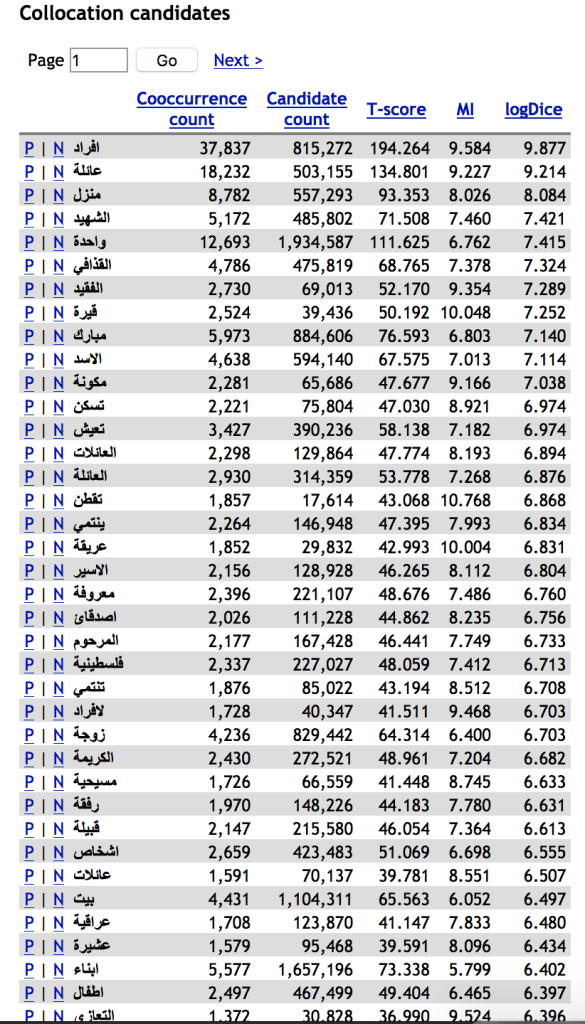
A search in arTenTen corpus in the SkechEngine website shows that the word ςaa´ilah collocates with words like ‘members, house, one, the late, live, belong’ which shows that this word is used for a single family unit. See the collocates table in Arabic below
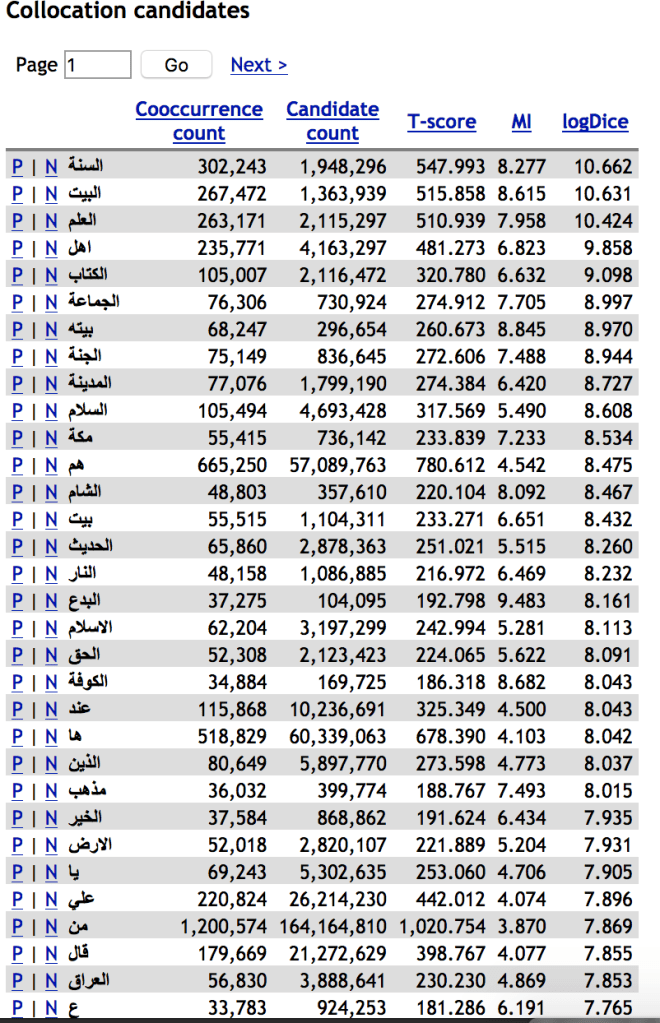
On the other hand, the word ´ahl collocates with ‘Sunnah, knowledge, book, heaven, Meddinah, Makkah, Islam’ which refers to multible family units sharing something in common be it a place to live or an ideology. See the collocation table below
However, since first language influence for speakers of Arabic comes from their dielects and not standard Arabic, I’ll focus on how the word for family is used in Najdi Arabic, my dialect. Why did I think of my brothers and sisters when I was asked about my family and not of my husband and kids?
Well, in Najdi Arabic ςaa´ilah refers to ‘a household; a family name’, and it is widely used in the question ‘What is you ςaa´ilah?’ which means ‘What is your family/last name?’ The word ´ahl is also widely used to refer to the usual sense of the English word ‘family’. However, its meaning differs according to who uses it. To a women ‘family’ is her relatives: parents, brothers, sisters, uncles, aunts; but to a man, his wife and children is his ‘ahl ‘family’.
So for this reason, when I was asked whether my family are with me in the UK I thought of my brothers and sisters and not my children. I thought of the word ´ahl
How would I refer to my small family in Arabic, you ask? Well, I would say my children, with no mention of the hubby!


 لسان ولغة